Mexican Climate
Temperatures and Climate
Mexico is a sunny destination rich in contrasts : from tropical beaches to arid deserts, from humid jungles to temperate highlands. Thanks to this geographic and climatic diversity, it is possible to travel throughout the country year-round, provided you choose the right region and time of year.
Two Major Climate Zones
Crossed by the Tropic of Cancer, Mexico has two major climate zones:
- Tropical climate in the south : hot and humid, with little variation in temperature.
- Temperate, dry climate in the north : more varied, with very hot summers and sometimes cold winters.
Altitude
However, this distribution is significantly altered by altitude. Topography plays a major role in the actual climate experience.
Generally, the following distinctions are made :
- Up to 1,000 m in altitude: average temperature of 25°C, hot and humid climate.
- From 1,000 to 2,000 m: average around 18°C, more temperate climate.
- Above 2,000 m: temperatures are cooler, especially in winter (ex : Mexico City at 2,240 m with an annual average of 16.5°C).
Rainy Season
The rainy season runs from June to October throughout Mexico, with particularly heavy rainfall. Showers, often heavy, generally occur in the late afternoon and last about an hour, giving way to typically sunny mornings and high temperatures around 30°C.
🗻Good to know: The peaks of volcanoes like Popocatépetl and Iztaccíhuatl are often covered in snow during the winter.
The Seasons in Mexico
Generally speaking, the Mexican year is divided into two distinct seasons. The dry season, which runs from October to May, is by far the best time for travelers. The skies are clear, the days are sunny, and humidity is low: it’s the ideal time to explore colonial cities, archaeological sites, Pacific beaches, or the trails of Chiapas.
Conversely, the rainy season, from June to September, brings showers that are often brief but intense, usually in the late afternoon. This period, though more humid, also has its charms: nature bursts into green, rivers come back to life, and tropical landscapes are more vibrant than ever. Traveling in the summer simply requires a bit more flexibility in planning your days, opt for morning excursions and plan a break in a covered area in the late afternoon.
Temperatures and Weather in Mexico
MEXICO’S CLIMATE MONTH BY MONTH
Dry season (Oct-May)
Rainy season (June-Sept)
| Month | Min. Temp. (°C) Mexico City/Mountain areas |
Max. Temp. (°C) Mexico City/Mountain areas |
Coastal Temp. (Yucatan/Caribbean) |
Rainfall (mm) |
Rainy days | Season | Recommendation |
|---|---|---|---|---|---|---|---|
| January | 6°C | 22°C | 25-28°C | 31 | 2 | Dry | 📍 Excellent |
| February | 8°C | 24°C | 26-29°C | 5 | 1 | Dry | 📍 Excellent |
| March | 9°C | 26°C | 27-30°C | 55 | 3 | Dry | 📍 Excellent |
| April | 12°C | 27°C | 28-31°C | 69 | 4 | Dry | 📍 Excellent |
| May | 13°C | 27°C | 29-32°C | 62 | 7 | Transition | ✅ Very good |
| June | 14°C | 25°C | 29-32°C | 343 | 15 | Rainy | ⚠️ Acceptable |
| July | 13°C | 24°C | 30-33°C | 193 | 17 | Rainy | ⚠️ Acceptable |
| August | 13°C | 24°C | 30-33°C | 224 | 14 | Rainy | ⚠️ Acceptable |
| September | 13°C | 23°C | 29-32°C | 309 | 13 | Rainy | ❌ Not recommended |
| October | 11°C | 23°C | 28-30°C | 179 | 9 | Transition | ✅ Very good |
| November | 8°C | 22°C | 27-29°C | 56 | 5 | Dry | 📍 Excellent |
| December | 6°C | 22°C | 26-28°C | 31 | 2 | Dry | 📍 Excellent |
CLIMATE CHARACTERISTICS BY AREA
| Region | Altitude | Average temperature | Characteristics | Best time to visit |
|---|---|---|---|---|
| Northern Mexico | Variable | 15-20°C (winter) 30-35°C (summer) |
Continental climate, cold winters, very hot summers | March – May, Oct – Nov |
| Mexico City & Mountain areas | 2000-2500m | 16-19°C | Temperate highland climate, cool nights | Nov – April |
| Pacific Coast | 0-1000m | 25-30°C | Tropical climate, hot and humid | Nov – May |
| Yucatan & Caribbean | 0-500m | 26-32°C | Tropical climate, sea temperature 28-30°C | Dec – April |
| Chiapas (Mountains) | 1000-3000m | 12-18°C | Subtropical mountain climate, fog | Nov – April |
IMPORTANT NOTES
| Phenomenon | Period | Affected areas | Impact |
|---|---|---|---|
| Hurricane season | June – November | Atlantic and Pacific coasts | High risk Aug-Oct, torrential rainfall |
| Spring Break | February – April | Tourist areas (Cancun, etc.) | Very high visitor numbers, increased prices |
| Cold northern winds | December – February | Northern and mountain areas | Sub-zero temperatures possible |
| Monarch butterflies | November – March | Michoacán reserves | Exceptional natural spectacle |
Live weather and temperatures in Mexico
The Rainy Season in Mexico
The rainy season lasts from June to mid-October across most of Mexico, marking a significant climatic transition. Contrary to popular belief, showers typically occur in the late afternoon and last only about an hour, giving way to mornings that are often sunny. This period is characterized by higher temperatures around 30°C and rains that can be quite heavy, sometimes making travel difficult. The risk of hurricanes is particularly high between August and October-November, especially on the Yucatán Peninsula and along the coasts, with weather phenomena that can cause strong winds and flooding. Despite these challenges, the rainy season transforms Mexico’s landscapes into lush green oases, offering more affordable rates for adventurous travelers willing to cope with this unpredictable weather.
Tropical Cyclones
Certain regions, particularly the coasts, are vulnerable to tropical cyclones. The Yucatán Peninsula, the Gulf of Mexico, and the southern Pacific coast may be affected between June and November. Although major storms, such as Hurricanes Gilbert (1988), Wilma (2005), and Kenna (2002), remain rare, Mexican authorities now have effective warning systems in place. Generally, trips are not disrupted, provided you stay informed.
Winds and Rain
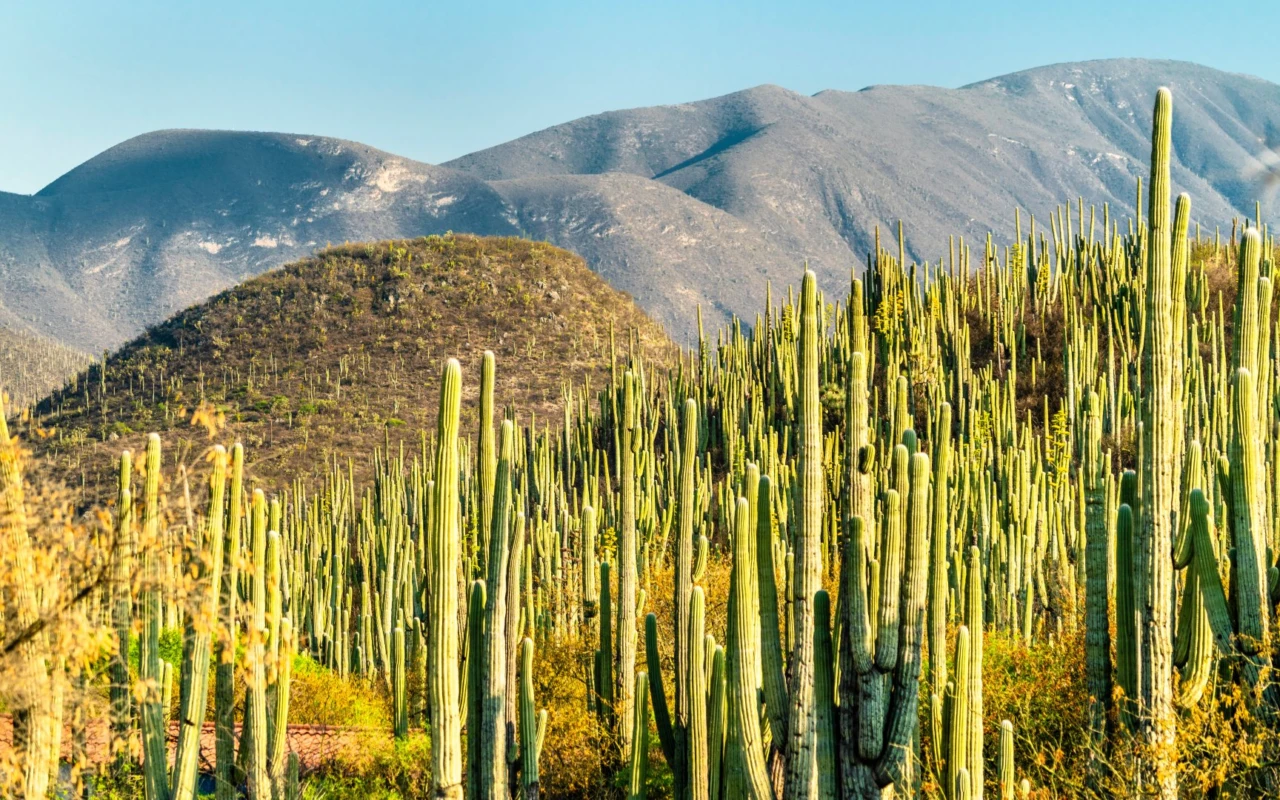
The prevailing winds, the famous trade winds blowing from the northeast, also play a crucial role. Full of humidity, they enter via the Gulf of Mexico and dump their rain on the eastern slopes of the Sierra Madre and Chiapas. But once they cross the mountains, these winds reach the already arid highlands, which explains the relative dryness of the country’s center. This is particularly true in the “Bolsones” region in the north, where the distance from the sea, combined with the effect of the mountain ranges, creates near-desert conditions. Summers there are scorching, winters sometimes freezing, and rainfall is almost nonexistent. To the west, the Pacific slope receives less humidity than the Caribbean coast. However, during the summer, Pacific cyclones can bring sporadic rains, especially in the southern part of the country. In contrast, Baja California and northwestern Mexico remain among the driest areas on the continent.
Current temperature and wind chart for Mexico
Overall, it is estimated that 49% of Mexico’s territory has a dry climate, 23.2% has a temperate climate (humid or sub-humid), and 27.7% has a hot and humid climate. Areas located between 400 and 1,500 meters in elevation are often the most pleasant to live in and visit, offering a nice balance between warmth and coolness.
When is the best time to visit Mexico? Choose the right time of year based on your travel plans.
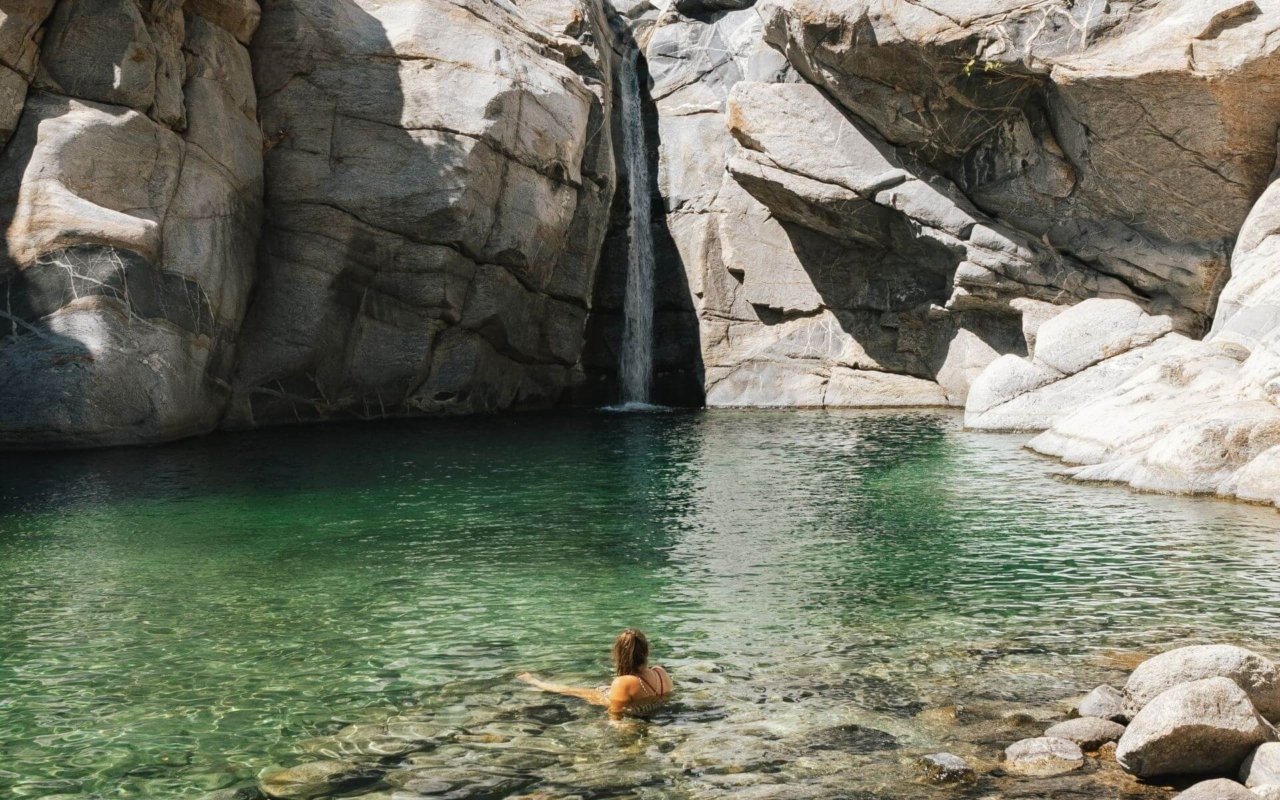
Choosing the right season depends on the type of trip you’re planning. If you’re looking for peace and quiet, the months of May, June, September, or October, outside of European school holidays, will offer lush green landscapes and lower prices, despite the occasional rain shower. On the other hand, for cultural tours, city visits, or cloudless beaches, the period from November to April remains the safest bet. Nature lovers, meanwhile, will appreciate the rainy season for the lush forests, the refreshing waterfalls, and the more authentic atmosphere of the villages.
What to pack?
Finally, to make the most of your stay, it’s advisable to pack light, breathable clothing, as well as a jacket for evenings at higher elevations. In summer, a raincoat or lightweight umbrella can be useful, as a good sunscreen year-round. In tropical areas, especially by the sea or in the forest, insect repellent is also a good idea.